

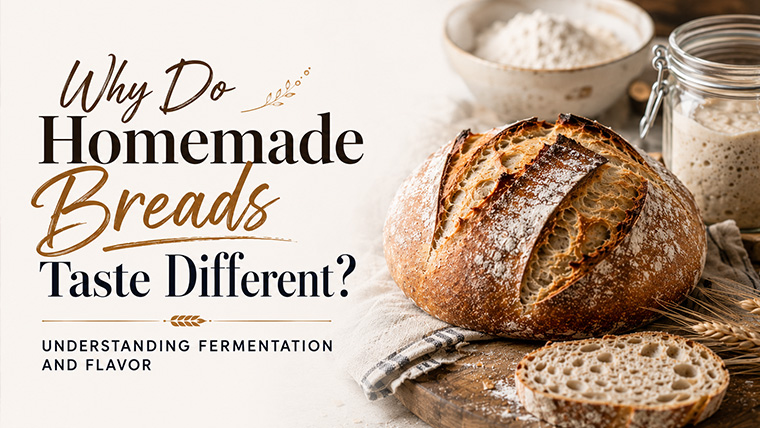
There’s a moment nearly every home baker has lived through. The recipe was followed exactly, flour weighed to the gram, timer set, oven preheated just right, and yet the loaf that comes out tastes noticeably flatter than the one from the bakery down the street. It’s not that anything was done wrong. It’s usually that something invisible, something happening quietly inside the dough while it sat there resting, never got the time it needed. This is a question that comes up constantly among people looking into baking courses in Chennai, where the gap between a technically correct loaf and a genuinely flavorful one tends to reveal itself fast.
This blog takes a closer look at that gap and specifically at fermentation, the slow, unseen process behind most of what actually gives bread its character. It covers why time matters more than most recipes let on, why wild yeast and commercial yeast lead to such different flavor outcomes, how hydration shapes taste as much as texture, the quiet but essential role salt plays beyond seasoning, and why patience, more than any single ingredient, tends to be the real difference between an unremarkable loaf and one worth remembering. Nothing here is a trick being held back. It’s simply a clearer view of a process that rewards attention over speed. In this blog, we will take a closer look at why fermentation, far more than the ingredient list, is what ultimately decides how bread tastes.
The Same Recipe, Two Very Different Loaves
Two bakers can use identical flour, identical yeast, and the same oven temperature and still walk away with loaves that taste completely different from one another. The overlooked variable, more often than not, is time, how long the dough was actually given to ferment before it hit the oven. A rushed rise, pushed along with extra yeast and added warmth, will still technically become bread. But it won’t carry that layered, faintly tangy depth that only comes from letting the process unfold slowly. Flavor in bread rarely comes down to what’s added. It comes down to how much time those additions are given to actually do something.
What Is Actually Happening Inside That Rising Dough
Fermentation gets described casually, as if it’s just the dough puffing up. It’s really a slow, ongoing chemical process. Yeast feeds on the natural sugars in flour and releases carbon dioxide, which is what forms the air pockets people associate with good bread. But quietly, alongside that, it also produces small amounts of alcohol and organic acids, and this is where real flavor complexity comes from. None of this happens quickly, and trying to force it rarely ends well. The longer that process is allowed to continue, within reasonable limits, the more layered the final flavor turns out to be.
Wild Yeast and Commercial Yeast Are Not Interchangeable
Commercial yeast is convenient. It’s fast, dependable, and consistent, which explains why it’s the default choice for anyone short on time. But that convenience comes with a tradeoff. Wild yeast, the kind that lives in a sourdough starter, works far more slowly and shares the dough with naturally occurring bacteria, mostly lactobacilli. That bacterial activity is exactly what gives sourdough its distinct tang, something commercial yeast can’t replicate no matter how long the dough is left sitting. This isn’t a question of one being better than the other. It’s about knowing, before the first ingredient goes into the bowl, what kind of flavor is actually being aimed for.
Hydration Shapes More Than Just the Crumb
Conversations about hydration, the ratio of water to flour, usually stick to texture, whether the finished bread is airy or dense. But hydration also has a real effect on fermentation speed and flavor. Wetter doughs ferment more actively, since water lets yeast reach sugars more easily, which speeds up flavor development but also makes the dough noticeably harder to handle. Drier doughs are easier to work with but ferment more slowly and tend to produce a gentler flavor. Neither is the correct choice. They just lead somewhere different, and knowing that tradeoff upfront saves a lot of frustration down the line.
Salt Is Doing More Than Seasoning the Bread
It’s easy to assume salt is only there to keep the bread from tasting bland, added almost as an afterthought. In practice, salt is doing structural work throughout fermentation. It slightly slows yeast activity, allowing for a longer, more controlled rise, and it strengthens the gluten network, which affects how well the dough holds together. Bread made with too little salt tends to ferment too fast and lose its structure, and it usually tastes flat as a result too. Salt is quietly earning its place in the loaf long before anyone gets to taste it.
Patience Is the Ingredient Most Recipes Leave Out
No recipe lists patience as an ingredient, yet it might be the one that matters most. Home bakers, often working around a tight schedule, tend to cut fermentation short, and the bread still turns out. It just tastes less interesting for the shortcut. A dough left to ferment slowly over twelve to eighteen hours, usually somewhere cool, builds a depth of flavor that can’t be manufactured by turning up the heat or adding more yeast. This is exactly where structured, hands-on training earns its value, since fermentation timing is genuinely hard to internalize from a printed recipe alone. Programs built around practical, guided baking instruction, the kind associated with Zeroin Academy, tend to spend real time on this, because timing is something learned through repetition far more than through instructions on a page.
Learning to Read the Dough, Not Just the Clock
Over time, experienced bakers stop leaning entirely on timers and start paying attention to the dough directly, how it feels, how much it’s expanded, whether it springs back slowly or snaps back fast when pressed. That skill builds gradually and doesn’t come easily, much like fermentation itself doesn’t hurry for anyone. It comes from repeated attempts, the occasional flat loaf, and a willingness to notice small differences from one bake to the next. Structured environments make a real difference here too, since guided feedback tends to shorten a learning curve that trial and error alone could stretch out for years.
Back to That First Disappointing Loaf
Think back to that loaf that did everything the recipe asked and still came up short. Nothing about that was a failure. It was simply dough that never got the time it needed to become something more than the sum of its ingredients. Flavor in bread doesn’t come from better ingredients alone. It evolves slowly, shaped by time, temperature, and attention, the same way most things worth making usually are. For anyone genuinely curious about closing that gap between correct and memorable, Baking Classes In Chennai Velachery offer exactly the kind of structured, hands-on understanding that a recipe alone can’t quite provide, the kind that turns an ordinary loaf into something worth the wait.
