


Introduction: What is the S and P 500?
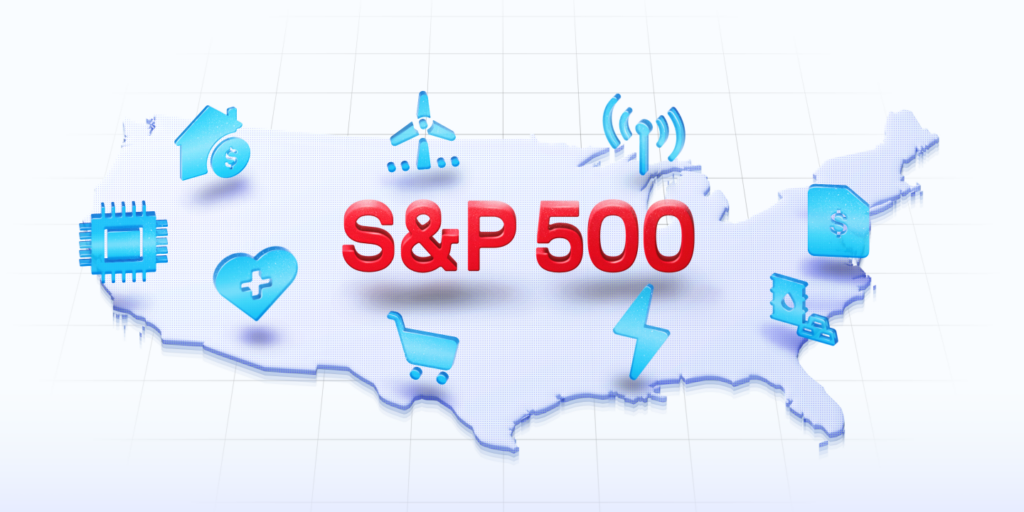
The s and p 500 is one of the most influential stock market indices globally. It represents the 500 largest publicly traded companies in the United States and spans industries such as technology, healthcare, finance, energy, and consumer goods. Investors, analysts, and institutions use it as a benchmark to measure market performance, track economic health, and guide investment decisions. Unlike indices that focus on specific sectors, the s and p 500 provides a broad view of the U.S. economy.
The index is market-capitalization weighted, meaning larger companies have a more significant impact on overall performance. This allows investors to understand where market value is concentrated and how major corporations influence trends.
History and Evolution of the S and P 500
The s and p 500 was introduced in 1957 by Standard & Poor’s as an evolution of earlier stock tracking methods. Financial analysts wanted a comprehensive, reliable measure that could reflect the entire U.S. economy rather than just a few companies.
Over the decades, the index has evolved to include large-cap companies across diverse industries. Its structure and methodology have been updated to reflect changes in corporate reporting, market behavior, and investor needs. The s and p 500 became widely recognized as a global financial benchmark due to its accuracy in capturing economic trends.
How the S and P 500 is Calculated
The s and p 500 uses a market-capitalization weighting formula. This means each company’s influence on the index is proportional to its total market value (stock price × number of outstanding shares).
Steps of calculation:
- Determine the market capitalization of each of the 500 companies.
- Sum the market capitalizations to get the total market value of the index.
- Adjust for a divisor that maintains continuity when companies are added, removed, or split.
- Calculate the index value by dividing the total market capitalization by the divisor.
This method ensures the index reflects actual investor exposure to the largest companies while providing a realistic snapshot of market trends.
Why the S and P 500 Matters to Investors
The s and p 500 is more than a number; it is a guide to market health and an essential tool for both individual and institutional investors. Key reasons include:
- Benchmark for Investment Performance: Mutual funds and ETFs compare their returns to the s and p 500.
- Diversification: By tracking 500 companies, the index spreads risk across industries.
- Economic Indicator: Trends in the index often reflect broader U.S. economic conditions.
- Global Influence: Many multinational corporations in the index link its performance to international markets.
Performance Trends of the S and P 500
The s and p 500 has historically delivered strong long-term returns. Despite short-term volatility from recessions, geopolitical tensions, or interest rate changes, the index has generally trended upward over decades.
Key performance insights:
- Long-term growth averages 7–10% annually, including dividends.
- Major crashes, like in 2008 or 2020, highlight temporary risks but show market resilience.
- Technology and innovation sectors have increasingly driven performance in recent decades.
Investing in the S and P 500
Investors can access the index through multiple methods:
- Index Funds: Mutual funds that mirror the s and p 500.
- Exchange-Traded Funds (ETFs): Traded like stocks, they offer flexibility and low fees.
- Futures and Options: Derivatives allow professional investors to hedge risk or speculate.
- Robo-Advisors: Automated platforms often build portfolios around the index for long-term growth.
Investing in the index is considered a passive strategy, ideal for long-term wealth creation, retirement savings, and inflation protection.
Risks and Considerations
While the s and p 500 offers long-term growth, it comes with risks:
- Market Volatility: Short-term price swings can be significant.
- Sector Concentration: Large tech companies have a high weighting, which may skew performance.
- Global Exposure: International economic and geopolitical factors influence the index.
- Emotional Investing: Reacting to daily fluctuations may lead to poor decisions.
Long-term, disciplined investing helps mitigate these risks, making the s and p 500 suitable for patient investors.
Sector Composition and Evolution
The s and p 500 reflects changing economic priorities. Historically dominated by industrials and energy, the index now heavily features technology, healthcare, and consumer services. Sector shifts signal broader economic trends, like the rise of digital infrastructure or renewable energy.
Understanding sector composition helps investors anticipate which areas of the market may drive future performance.
Global Significance of the S and P 500
Beyond U.S. borders, the s and p 500 is closely watched by global investors. Multinational companies in the index generate revenue worldwide, linking the index to international trade, currency shifts, and geopolitical developments.
Changes in the index often influence global indices, investment strategies, and even foreign economic policies, highlighting its worldwide impact.
The S and P 500 as a Psychological Indicator
News outlets frequently report daily gains or losses in the s and p 500, shaping public perception. A rising index can boost consumer confidence, while sharp declines may increase caution and reduce spending. This psychological effect underscores the index’s influence on both investors and the broader economy.
Long-Term Wealth Creation with the S and P 500
Historically, investing in the s and p 500 has helped individuals grow wealth over decades. Key benefits include:
- Inflation Hedge: Equities generally outpace inflation.
- Compounding Returns: Reinvested dividends amplify growth over time.
- Accessibility: ETFs and index funds allow small investors to participate.
- Diversification: Exposure to multiple sectors reduces single-stock risk.
For long-term goals like retirement or education funding, the s and p 500 remains a cornerstone of portfolio construction.
Future Outlook of the S and P 500
The s and p 500 will continue evolving with technology, demographics, and global economic trends. Innovations in AI, renewable energy, healthcare, and digital infrastructure may drive future leaders. Meanwhile, traditional industries may shrink in influence, reflecting the dynamic nature of markets.
Investors should stay informed about sector shifts, global developments, and corporate trends to maximize the potential of index-based investments.
Conclusion
The s and p 500 is far more than a list of 500 companies—it is a comprehensive snapshot of corporate America, an essential benchmark, and a global financial indicator. Its long-term performance, sector diversity, and influence on investor psychology make it central to understanding markets.
By investing thoughtfully and understanding the dynamics of the index, individuals and institutions can harness its potential for long-term growth, risk management, and financial stability.
Read More:- Dollar General: Business Model, Growth Strategy, and Retail Impact
